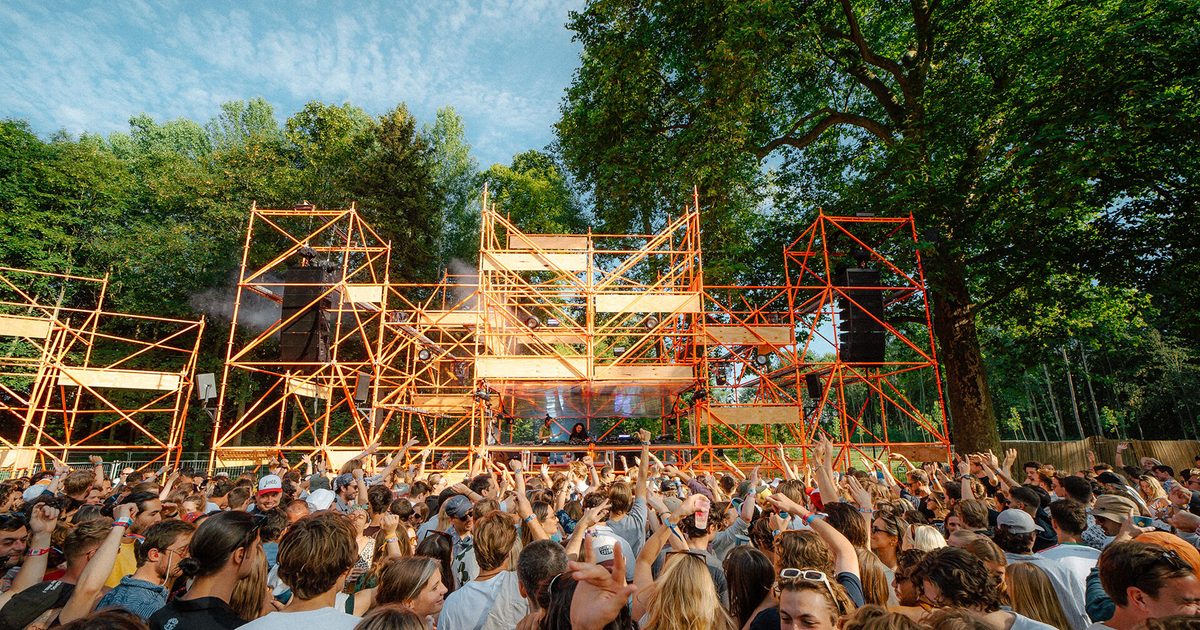
Electronic music's climate response is showing up in concrete decisions around power, food, transport, waste and touring, even as the industry's reliance on travel remains one of its hardest problems to solve.
Sustainability in dance music is no longer only a question of recyclable cups or one visible green initiative. The largest impacts of events can sit across power, audience travel, artist travel, food, materials and temporary infrastructure.
A Greener Future, EarthPercent and DJs for Climate Action are among the organizations pushing those questions further into event planning and artist practice.
The useful examples are the ones that can be described specifically. Paradise City and DGTL have been highlighted for plant-based food, renewable energy and lower-carbon travel networks, while Boom Festival has invested in biodiversity and permaculture on its site.
Some festivals are changing the operating model
Beatportal's 2026 sustainability report points to Paradise City in Belgium and DGTL in the Netherlands as events combining plant-based food, renewable energy and travel systems designed to encourage lower-carbon journeys.
Boom Festival in Portugal is another long-term example. Because it owns its site, the festival has been able to work on biodiversity regeneration and permaculture over many years rather than treating environmental work as a temporary event-week intervention.
Shambala builds circular principles into procurement
Shambala in the UK describes its environmental approach as a decision-making framework for suppliers, materials, waste and on-site operations. Its team frames the basic circular principles as using less, reusing where possible and buying responsibly.
That kind of work is less visible than a headline stage feature, but it is exactly where sustainability becomes repeatable: the rules used to buy, build and dispose of things change before the audience arrives.

Touring and flying remain the hard part
The same reporting makes clear that international artist mobility is still a major unresolved issue. Dance music is built around touring, and reducing flights can collide with the economics of an artist's career and the geography of the scene.
That is why the most credible climate conversation is not a claim that electronic music has solved the problem. It is a shift toward measurable operating changes, stronger local scenes and touring decisions that reduce unnecessary movement where practical.

Fresh New Tunes
We cover new music, live culture and the people shaping electronic music.


