
The ringing after a great set is not proof that the night worked. It is a warning that the sound was intense enough to stress the sensory system that makes music possible in the first place.
For people who spend weekends in clubs, festivals and concert venues, hearing protection can feel strangely optional. We plan the ticket, the transport and the outfit, then walk into hours of amplified sound with nothing between the speakers and one of the most delicate systems in the body.
The risk is not that one kick drum will instantly take your hearing away. Noise exposure is a dose: volume, duration and repetition all matter. A very loud sound can cause immediate damage, but the more common pattern is quieter and cumulative. Each night adds to the total, and the early signs are easy to normalize because they often fade by the next morning.
That is why earplugs belong in the same category as sunscreen at an outdoor festival. They are not an admission that the experience is too much. They are a simple way to keep doing the thing you love without asking your ears to absorb the full impact every time.
dBA — NIDCD’s threshold for hearing damage from long or repeated exposure
dBA range cited for live music and clubs
Estimated safe exposure at 100 dBA before risk rises, per NIOSH
dB filter range of the music earplugs recommended below
What loud sound does.
A practical, music-first guide to volume, ringing, tinnitus, fit and the kind of earplugs that make sense for concerts, clubs and festivals.
How loud is a night out, really?
NIDCD says long or repeated exposure at or above 85 dBA can cause hearing loss. Music through headphones at maximum volume, sporting events and concerts run roughly 94 to 110 dBA — a real venue can sit lower or higher depending on the system, your position and the way the room is mixed.
The ringing is a warning, not a souvenir
Temporary does not mean harmless.
After a loud show, music may sound dull, conversations may feel slightly distant or a high-pitched tone may appear in one or both ears. That post-show change is often called a temporary threshold shift: your hearing sensitivity has dropped for a period after the exposure. The World Health Organization notes that loud sound can fatigue the sensory cells in the ear, producing temporary hearing loss or tinnitus while those cells recover.
Temporary does not mean harmless. The National Institute on Deafness and Other Communication Disorders says hearing can appear to return to normal a day or two after loud noise even though recent research suggests permanent injury may still have occurred. The absence of obvious symptoms the next morning is therefore not a clean bill of health.
Tinnitus is also not a badge of honor. It is a symptom, usually described as ringing, buzzing, hissing or humming without an outside sound source. It can disappear, recur after every night out or become persistent. The more often the ears are pushed into ringing or muffled hearing, the more seriously the exposure pattern should be taken.
What loud sound does inside the inner ear
Sound begins as movement. Waves enter the ear canal and vibrate the eardrum. Three tiny bones in the middle ear pass that vibration into the cochlea, a fluid-filled structure shaped like a snail. Inside it sit sensory hair cells topped by microscopic bundles called stereocilia.
As the fluid moves, the bundles bend. That mechanical movement is translated into electrical information and sent along the auditory nerve to the brain, where it becomes the detail we recognize as a vocal, hi-hat, bassline or crowd response. The name 'hair cell' is literal only in appearance: these are specialized sensory cells, not ordinary hairs that can simply grow back.
Intense sound can make those structures work beyond their comfortable range. Repeated or prolonged exposure can damage the hair-cell bundles, the cells themselves and the connections that carry information toward the brain. In humans and other mammals, permanently lost cochlear hair cells do not naturally regenerate. Once enough of the system is damaged, the result can be lasting hearing loss, tinnitus or difficulty separating speech from background noise.

Volume and time work together
NIDCD says long or repeated exposure at or above 85 dBA can cause hearing loss, and the louder the sound, the shorter the time it takes to cause damage. NIOSH's occupational exposure guidance, which uses that same 85 dBA threshold, gives useful reference points: about eight hours at 85 dBA, around 15 minutes at 100 dBA and roughly a minute and a half at 110 dBA.
NIDCD lists music through headphones at maximum volume, sporting events and concerts at roughly 94 to 110 dBA. A real venue can be lower or higher depending on the system, your position and the way the room is mixed, but those figures show why a multi-hour night can quickly become a meaningful dose of loud sound.
Distance and duration matter too. Moving farther from a speaker, taking quieter breaks and wearing hearing protection can all reduce exposure. The practical goal is not to calculate a perfect number while dancing; it is to recognize clearly loud environments and reduce how much sound reaches the ear.

Why high-fidelity earplugs make sense for music
A common reason people avoid earplugs is the fear that the music will sound flat, distant or muffled. Basic foam plugs can be extremely useful, especially when strong protection is the priority, but they often reduce high frequencies more than low frequencies. That imbalance can make a set feel darker and can make conversation harder.
High-fidelity or musician-style earplugs are designed to reduce the overall level more evenly across frequencies. They do not make a dangerously loud room automatically safe, and real-world protection depends heavily on fit, but a more balanced filter can make it easier to leave the plugs in for the entire show. Consistency matters more than owning a technically impressive product that stays in its case.
Protection can also improve the experience. When the harshest level is taken down, the mix can feel less fatiguing and conversation can become easier. Many people notice that the ears stop feeling overwhelmed after a few minutes and the reduced level begins to feel normal. Removing one plug to compare can suddenly reveal just how aggressive the unfiltered room is.
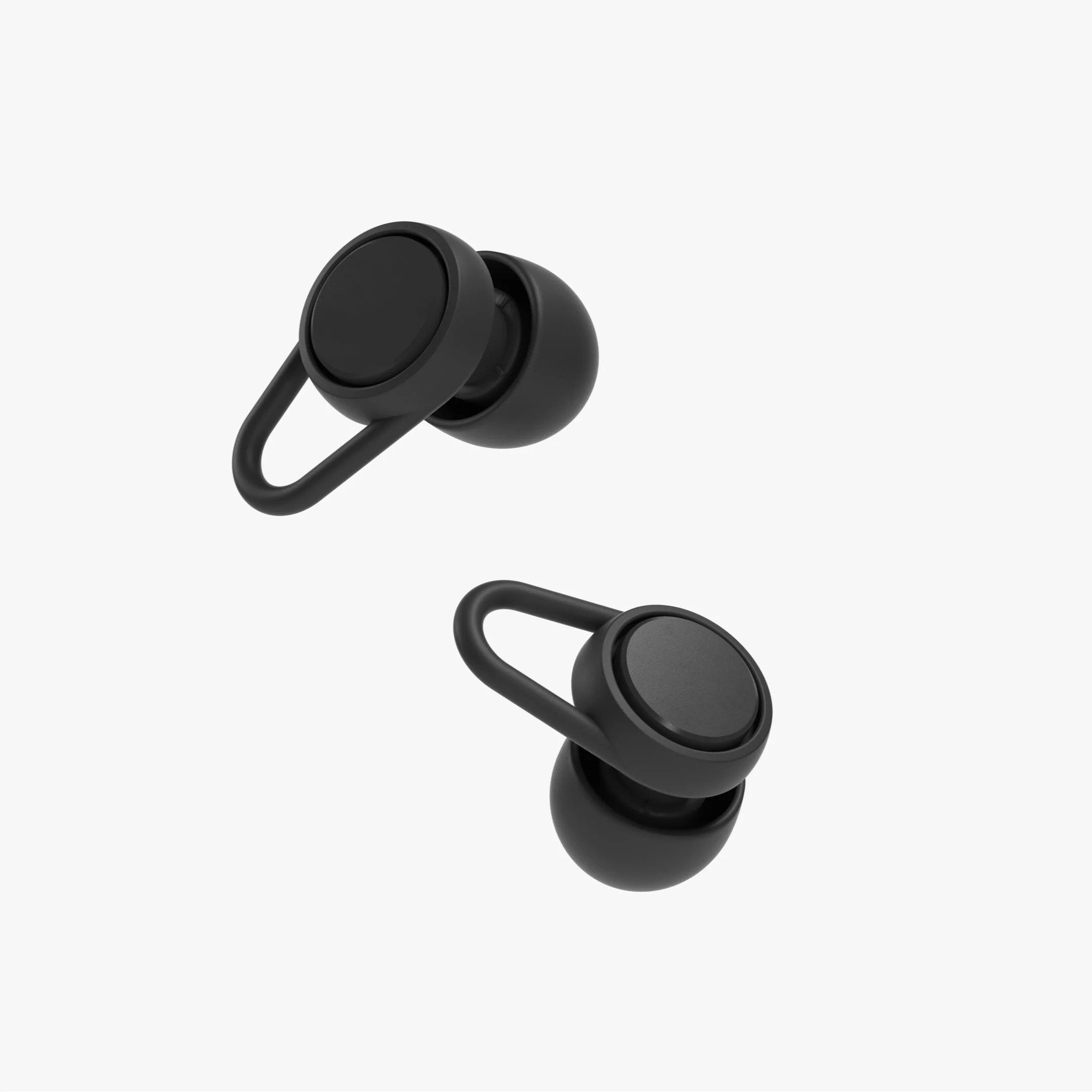
- Lowers the overall level more evenly across frequencies than standard foam
- Keeps the mix clearer, so it is easier to leave plugs in for the whole show
- Real protection still depends heavily on getting the fit right

The fit matters as much as the filter
Reusable earplugs normally include several tip sizes because the seal is personal. A tip that is too small can leak sound; one that is too large may become uncomfortable and tempt you to remove it. Try the options at home before the event, and follow the manufacturer's fitting instructions rather than forcing the plug deeply into the ear.
Put them in before the headline set begins, ideally before entering the loudest area. Waiting until your ears ring means the exposure has already happened. Once they are seated, both sides should feel even and the sound should be reduced without one ear feeling dramatically more blocked than the other.
Keep them in. Taking earplugs out for a favorite track or for repeated conversations adds short bursts of full-level exposure. If you need to speak, step into a quieter area rather than holding one ear open next to the system. Clean reusable plugs as directed, let them dry fully and keep them in a case so the pair you own is the pair that actually reaches the venue.
Build a safer show routine
Earplugs are the most portable part of hearing protection, but they work best alongside a few simple choices.
Move away from the main speaker line when possible.
Take breaks in quieter areas between sets.
Give your ears recovery time after a loud night instead of following it immediately with headphones at full volume.
If your phone provides a sound-level estimate, use it as a warning tool rather than a medical-grade measurement.
Frequent concertgoers, DJs, producers and venue workers should consider a baseline hearing test with a licensed audiologist. A test can reveal changes that are difficult to notice in daily life and gives you something objective to compare over time. Musicians and industry professionals depend on hearing not only for enjoyment but for work, which makes prevention part of maintaining the instrument they use every day.
Seek medical attention promptly for sudden hearing loss, particularly in one ear. Sudden sensorineural hearing loss is considered a medical emergency. Tinnitus accompanied by sudden hearing loss, severe dizziness, facial weakness or a head injury also needs urgent assessment. For ringing or muffled hearing that keeps returning, persists or affects sleep and concentration, arrange a hearing check rather than assuming it is simply part of going out.
This article provides general educational information and is not a substitute for care from a doctor or licensed audiologist.
Protect the music you have not heard yet
Hears makes reusable high-fidelity earplugs designed to reduce volume while keeping music and conversation clear. The range includes 20 dB and 25 dB options, four ear-tip sizes and a keychain case. Use the Fresh New Tunes link to receive 10% off.
- Reduces volume more evenly across frequencies than standard foam plugs
- Reusable, with four ear-tip sizes for a proper seal
- 20 dB and 25 dB filter options, plus a keychain case
Get A Pair HereAffiliate disclosure: Fresh New Tunes earns a commission on qualifying purchases made through this link, at no extra cost to you. Protection depends on fit and use.

Fresh New Tunes
We cover new music, live culture and the people shaping electronic music.


